Sex Toy Materials: The Complete Guide
Betty’s Expert Breakdown of What’s Body-Safe, What’s Not, and What to Choose
Sex toys come in an astounding range of materials, textures, and finishes, and if you’ve ever wondered “Is this actually safe?” you are asking the smartest question possible.
At Betty’s Toy Box, we believe pleasure should feel amazing, but it should also feel confident, informed, and truly body-safe. That’s why we built this comprehensive guide to sex toy materials. Whether you’re shopping for your very first toy, upgrading to something luxurious, or expanding your collection with new sensations, understanding materials helps you choose a toy that fits your body, your lifestyle, and your comfort level.
Because here’s the truth: material matters as much as shape, size, and features.
The Most Important Thing to Know About Sex Toy Materials
This part surprises people, so let’s get it out in the open:
There are no universal regulations for sex toy materials.
That means manufacturers are not all held to the same standards. The industry is largely self-regulated, and while many reputable brands take safety seriously, not everyone does.
Why that matters when you shop
-
Some low-quality toys may contain materials that are hard to clean, quick to degrade, or not truly body-safe
-
Certain products may be made with fillers, mystery ingredients, or poor-quality coatings
-
Knockoffs can look identical to reputable products but use cheaper components
This is one of the biggest reasons customers shop with Betty’s. Our staff takes pride in curating brands that prioritize safety, performance, and quality, so you can explore with confidence.
Why Where You Buy Your Toys Matters
One of the most important parts of sex toy safety has nothing to do with shape, size, or even material. It has everything to do with where the toy comes from.
At Betty’s Toy Box, we only carry products from reputable manufacturers who are transparent about the materials they use and accountable for the quality of their designs. These brands invest in proper material sourcing, safer formulations, consistent manufacturing, and clear care instructions. When we choose a brand, we do it with your body in mind.
This matters because, as we said, the sex toy industry is not universally regulated, and not all sellers play by the same rules.
A word of caution about third-party marketplaces
Large third-party marketplaces, especially sites like Amazon, are notorious for:
-
knockoff versions of popular toys
-
misleading product descriptions
-
vague or missing material information
-
inconsistent quality between batches
-
toys labelled “silicone” that are actually coated plastics or blended materials
In many cases, the seller is not the manufacturer, and there is no real accountability if the materials are misrepresented or unsafe. Two listings may look identical but be made from completely different materials.
We see this firsthand when customers come to us after a disappointing or uncomfortable experience with a toy purchased elsewhere.
What Betty’s does differently
When you shop at Betty’s Toy Box, you are getting:
-
brands we trust and stand behind
-
clearly listed materials and care instructions
-
products chosen for safety, performance, and durability
-
a knowledgeable staff who can answer real questions, not guess
We believe that pleasure should never come with uncertainty. Knowing what you are putting in, on, or around your body is part of feeling confident, relaxed, and fully able to enjoy the experience.
Buying from a trusted retailer is not about being fancy or expensive. It is about being informed and protected, and that is something we take seriously every single day.
Quick Definitions: The Terms You’ll See (and What They Really Mean)
Porous
Porous materials contain tiny holes that can absorb fluids, oils, and bacteria over time. Even if they look smooth, bacteria can hide below the surface.
Betty’s expert advice: If a toy is porous, treat it with extra care and consider using a condom for easier cleanup and safer use.
Non-porous
Non-porous materials have a sealed surface, which makes them:
-
easier to clean
-
less likely to hold bacteria
-
ideal for sharing between partners (with proper cleaning)
-
great for switching between different types of play
Phthalates
Phthalates are chemicals sometimes used to soften plastics and rubber. They are controversial and not something we want near anyone’s intimate areas.
Phthalate-Free
Phthalate-free materials use other methods to achieve softness and flexibility. At Betty’s, we focus heavily on products that prioritize safer formulations.
The Betty’s Body-Safe Materials Cheat Sheet
If you want the fastest version of this guide, here it is:
✅ Best all-around materials: silicone, glass, stainless steel, ABS plastic
✅ Best for easy cleaning: silicone, glass, metal, ABS plastic
✅ Best for firm pressure: glass and metal
✅ Best for realistic softness on a budget: TPE/TPR (with caution), although these are quickly being replaced by liquid silicone options
🚫 Materials to be cautious with or avoid: jelly and low-quality mystery blends
Now let’s break it down properly.
The Most Popular Sex Toy Materials (and How to Choose)
1) Silicone (The Gold Standard)
Silicone is the superstar of modern sex toys. It’s used for everything from external stimulators to insertable toys, couples toys, and toys designed for advanced play.
Why customers love it
-
Non-porous
-
Body-safe and easy to clean
-
Durable and long-lasting
-
Available in a huge variety of softness levels, from silky-soft to firm
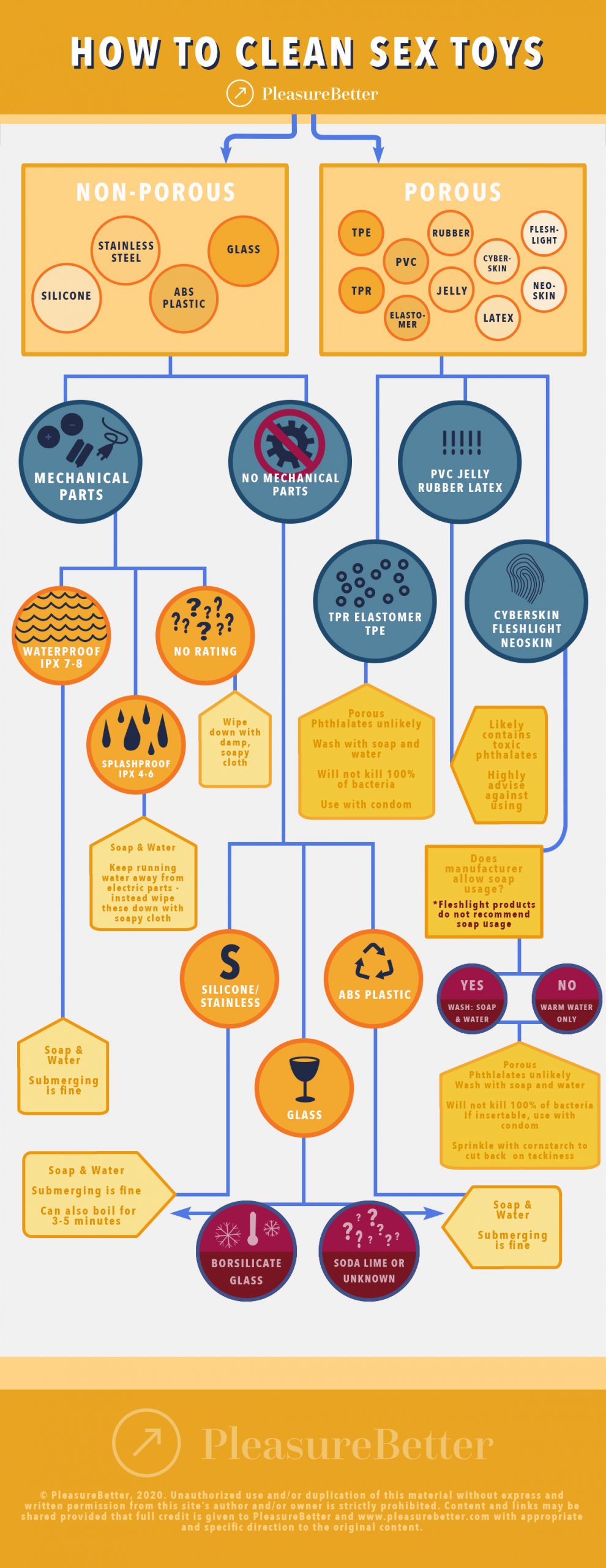
Cleaning silicone safely
Silicone is one of the easiest materials to keep fresh:
-
Wash with warm water and gentle soap
-
Use a toy cleaner approved for silicone
-
Many silicone toys can be sanitized more deeply (depending on manufacturer instructions)
Betty’s deep-clean option:
-
You can disinfect silicone with a bleach/water solution: 1 part bleach to 10 parts water, soak 10 to 15 minutes, then rinse thoroughly and dry completely
Lube compatibility note
Silicone toys are typically best paired with:
Some silicone-based lubes can interact with some silicone toys. It’s not universal, but it’s worth checking the manufacturer’s recommendations.
Betty’s recommendation: Water-based lubes are the safest all-around pairing for silicone toys.
2) ABS Plastic (Affordable, Powerful, and Surprisingly Great)
ABS plastic is commonly used in firm toys, compact designs, and toys that deliver strong vibration and crisp sensations.
Why ABS plastic is a fan favorite
-
Non-porous
-
Phthalate-free
-
Great for strong vibration transfer
-
Often more affordable than silicone
Best for
-
Anyone who wants a firm, smooth finish
-
Toys that rely on vibration and power
-
Budget-friendly options that still feel sleek and clean
Things to know
ABS plastic is rigid. If you want a lot of “squish,” silicone may feel more comfortable.
3) Glass (Borosilicate Glass)
Let’s clear up the biggest myth: glass toys are not fragile when they’re made correctly.
Quality glass toys are made from borosilicate glass, designed to withstand temperature change, pressure, and impact far better than regular glass. This is the same glass found in popular kitchen cookware.
Why glass is incredible
-
Non-porous
-
Easy to clean thoroughly
-
Firm for strong pressure and targeted sensation
-
Compatible with all lubes
-
Perfect for temperature play
Temperature play tips (simple and safe)
-
Warm in warm water for a cozy, soothing feel
-
Cool in cold water for a crisp, awakening sensation
Best for
-
People who love firm pressure
-
Anyone who wants a super-easy-to-clean toy
-
Sensation lovers who enjoy temperature changes
Considerations
Glass toys can be heavier than silicone, and the firmness may not be everyone’s preference.
4) Metal (Stainless Steel and Aluminum)
Metal toys are beloved for their gorgeous finish, smooth glide, and satisfying weight. They’re also one of the easiest materials to fully disinfect.
Why metal is a luxury-level choice
-
Non-porous
-
Easy to sanitize
- Compatible with all lubes
-
Great for temperature play
-
Smooth and sleek sensation with no drag
Stainless steel vs aluminum
-
Stainless steel: heavier, premium feel, often medical-grade
-
Aluminum: lighter, still firm and smooth
Considerations
-
Some people find metal toys heavy
-
Certain metal alloys may bother those with sensitivities (ex: nickel)
5) TPE and TPR (Soft, Stretchy, Realistic, and Porous)
TPE (Thermoplastic Elastomer) and TPR (Thermoplastic Rubber) are commonly found in softer, more flexible, realistic-feeling toys, and many budget-friendly designs. They are often used inside cannister style penis masturbators and are usually the material of choice for simple pocket pussy type strokers.
Why people choose TPE/TPR
-
Soft and elastic
-
Can mimic a realistic skin-like feel
-
Often more affordable than silicone
-
Great for flexible designs like penis masturbators
The important caution
Because TPE/TPR are porous:
-
bacteria can hide below the surface
-
they cannot be fully disinfected the way silicone or glass can
-
they break down over time more easily
- they can feel tacky to the touch and require refreshing powder (essentially cornstarch) to keep them smooth between uses
Betty’s best practices for TPE/TPR
-
Wash before and after every use with warm water + gentle soap or toy cleaner
-
Dry thoroughly
-
Store separately so they do not react with other toy materials
-
Avoid boiling or bleaching
-
Avoid oil-based lubes
- Never use the same toy for both anal and vaginal play. There is a huge risk of transmitting anal bacteria to the vagina, causing infections
Betty’s condom tip: If you want extra peace of mind with porous toys, a non-latex condom can help reduce direct contact and simplify cleanup. (Avoid latex with these materials because oils can degrade latex.)
6) “Realistic” Materials (UR3, RealSkin, Fanta Flesh, and More)
These names are usually brand-created labels for soft, realistic-feeling materials that are often based on TPE/TPR-style blends.
They can be incredibly lifelike, but they require extra care and can have a strong rubbery scent that does not dissipate.
Why people love realistic materials
-
Extremely soft and flexible
-
Often very realistic in look and feel
-
Popular for strokers, sleeves, and realistic insertables
Care and caution (this is key)
Because these materials are typically porous:
-
they can trap bacteria and odors
-
they may become tacky over time
-
they can degrade if stored improperly
Betty’s best practices
-
Use only water-based lubricant
-
Clean thoroughly after every use
-
Dry completely
-
Store separately from other toys
-
If the toy becomes tacky, some manufacturers recommend renewing powder (cornstarch is sometimes used)
Important note: Do not use talc powder.
7) PVC (Polyvinyl Chloride)
PVC can range from soft to firm depending on formulation. It’s sometimes used in budget-friendly gear and accessories.
What to know about PVC
-
Often porous or semi-porous, depending on the blend
-
Can have a strong plastic smell
-
Must be stored carefully to prevent breakdown
Betty’s best practices
If you’re using PVC, treat it like a porous material:
-
clean carefully
-
consider a condom barrier
-
do not switch between different types of play without proper precautions
8) Jelly (Why Betty’s Does Not Carry It)
Jelly is typically a soft rubber-like material that often shows up in very low-cost toys.
We’re blunt about this because we care about your body:
Betty’s does not carry jelly toys.
Why jelly is not recommended
-
porous and difficult to clean fully
-
can break down quickly
-
may contain phthalates
-
may release strong chemical odors
When it comes to intimate wellness, low price is not worth the risk.
Use best practices and consider barrier protection.
Choosing the Best Material Based on How You Play
Instead of thinking “What’s the best material?” (because honestly, that depends), ask:
What kind of experience do I want?
For everyday easy cleaning
Choose:
✅ silicone
✅ ABS plastic
✅ glass
✅ stainless steel
For a softer, cushier feel
Choose:
✅ silicone
⚠️ TPE/TPR with extra care
For firm, targeted pressure
Choose:
✅ glass
✅ stainless steel
✅ firm silicone cores
For temperature play
Choose:
✅ glass
✅ stainless steel
✅ aluminum
For shared toys or multiple partners
Non-porous is best:
✅ silicone
✅ glass
✅ metal
✅ ABS plastic
For porous toys (if you choose them)
Proceed with caution:
⚠️ TPE/TPR
⚠️ realistic blends
⚠️ PVC
Storage Rules That Protect Your Toys (and Your Body)
Storage is a huge part of toy safety, and it is often overlooked.
Store toys clean and fully dry
Moisture trapped in storage can encourage bacteria growth even on non-porous toys.
Keep different materials separated
Some materials can react to each other and degrade when stored touching.
Avoid extreme heat and direct sunlight
Heat can warp and damage certain materials over time.
Use toy bags or cases when possible
It keeps toys clean, discreet
"For more info check out this sex toy cleaning inforaphic by PleasureBetter.